Dundee’s Big Grow
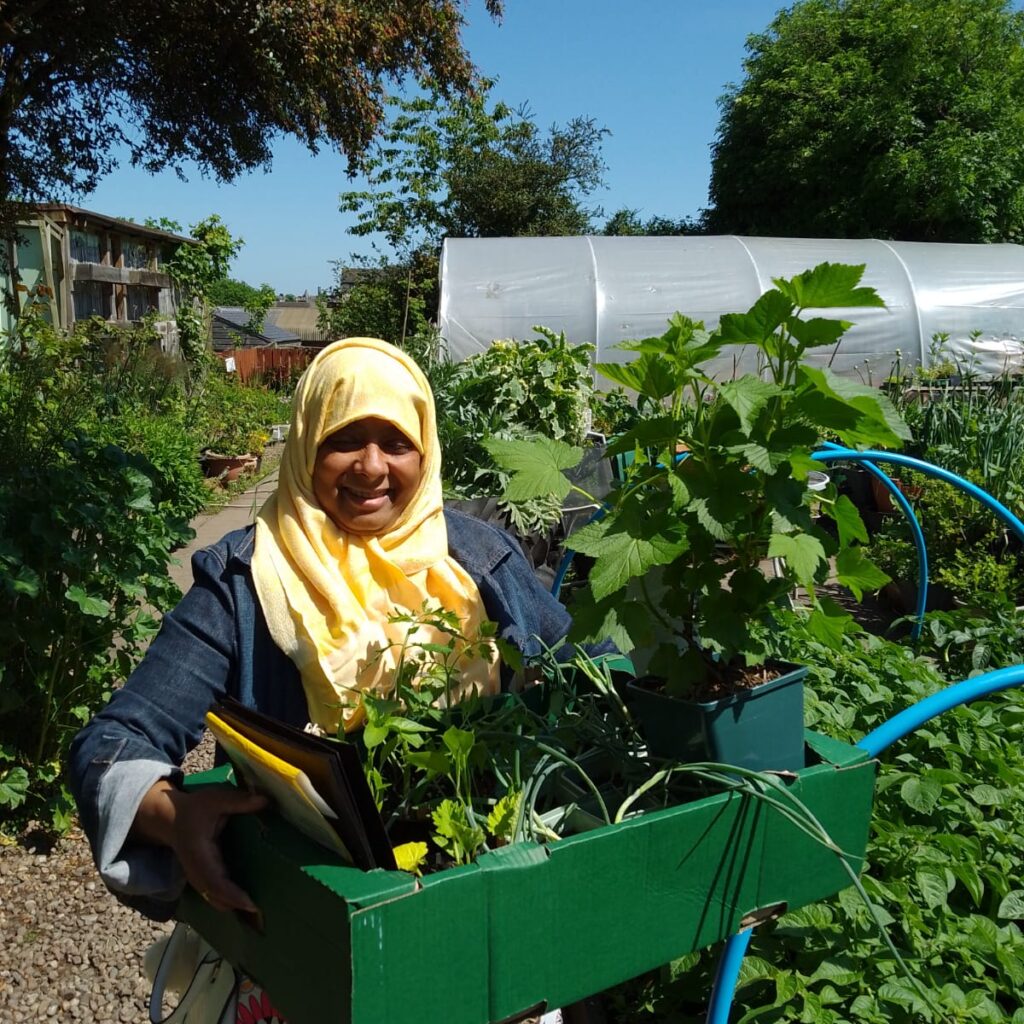
100 families and local groups
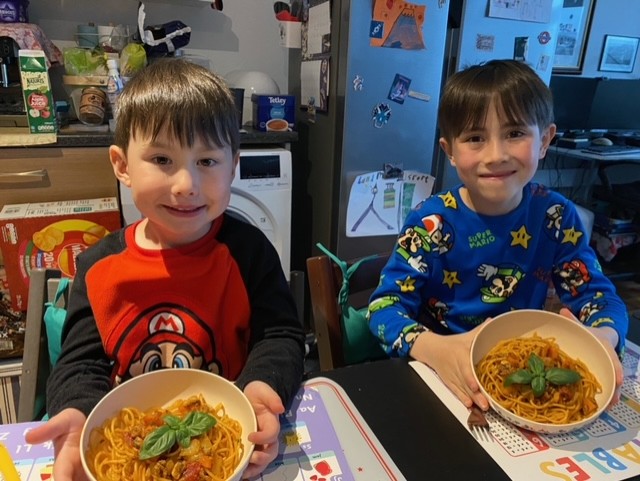
Grew and cooked their own food, proving that food can be grown in ANY space by ANYONE, with resources, horticultural advice, encouragement and peer support.
The Maxwell Community Centre and Garden has a long history of taking positive, creative approaches to food in the community, from distributing food to people in need to growing, cooking and learning across cultures and multiple generations. Their premises, a former church and garden, act as a local hub, offering often complex services in the Hilltown area of Dundee in a positive and inclusive way. In response to demand from folk wanting to grow their own and a desire to maximise their existing tool and seed library, the MC, with support from the Dundee Climate Fund, established ‘The Big Grow’. This ‘Hub’ approach provides a tested, engaging and practical way to grow more food and grow community. Nicola and Manuela, centre staff, share invaluable practical tips and advice for community centres and others looking to learn from their approach and try something similar.
The Centre provided:
Seeds, compost and pots tailored to participants’ needs
Horticultural advice
Encouragement and support for particpants growing journeys
Advisory site visits on request
A regular newsletter with growing tips, growers’ stories and videos
Workshop series and social events throughout the growing season
Why did you decide to take this approach?
In Dundee, food is central to addressing local climate justice and emissions whilst increasing access to more affordable, nutritious food. We need more of our food to be grown sustainably to support soil and nature to achieve this, we need to work with communities to demonstrate and practice what is possible.
How did you recruit people?
The 105 growers were recruited in many ways, tapping into the GROW DUNDEE network of gardens and voluntary sector partners through posters, flyers, and events. We ran a social media campaign, and online forms were provided to assess suitability and needs.
Key resources to get started?
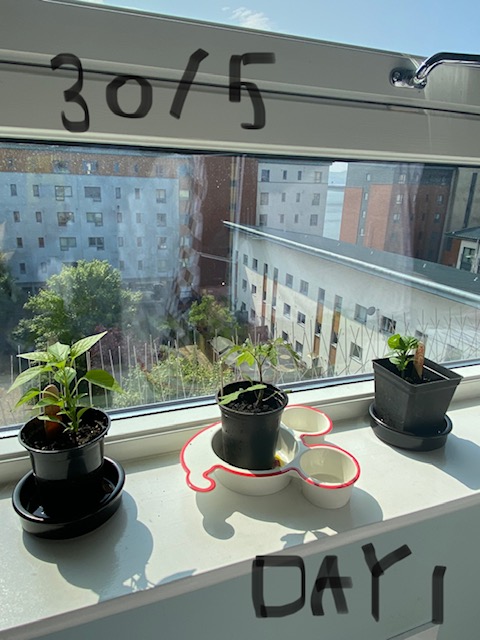
Participants were provided with personalised growing kits for windowsills or small garden spaces, along with tools and materials. Kits were adapted for community spaces or schools. For example, a small garden kit included: potatoes, chives and onions, outdoor bush tomatoes and chillies, salads, broccoli and kale, radish and carrots, peas and beans, strawberries, raspberries, blackcurrants and rhubarb! We integrated this with in-person workshops, social food events, advice and access to our tool and book library, regular newsletter with seasonal growing tips for the crops supplied, peer growing stories and ‘how-to videos’ and simple recipes.
What activities did you run?
We ran a range of garden and nature-related workshops throughout the year.
Garden planning, seed sorting and sharing, floodproof your garden, fruit tree pruning, chemical-free pest and disease control, container growing, composting, bug hotels, and fermentation.
The informal, hands-on workshops lasted up to 2 hours for up to 12 attendees. Attendees often took something from the workshop home. We also hosted several evening food socials using garden produce, Sassy Salads, Mocktails, and Italian and Spanish tapas. These were very popular.
How have you measured Big Grows impact?
Our surveys were overwhelmingly positive- with participants reporting increased food growing and social confidence, excitement in the food growing process and eagerness to repeat it all again! Growers loved the peer aspect and informal learning atmosphere, and many reported real enjoyment in the opportunity to connect with nature.
Costs?
Main costs have been roughly 2.5 days of staff time, growing resources, freelance professionals, materials, advertising, and volunteer expenses, which amounted to about 10k.
Our key learning?
Support from volunteers and other partnerships has been essential in this. If we were to repeat, we’d feed this into our existing work and other growing groups across the city. It was great for us to introduce participants to their nearest community garden or wildlife projects. We have ensured we include biodiversity themes, seasonal cooking skills, food-growing basics, and climate-friendly gardening. We also set up the gardeners’ cafe to cover the winter months, where we have spent time sorting seeds, preserving produce and planning for the growing year ahead.
Advice to others wanting to try their own Big Grow.
You don’t need to go as big as we did! We have an established volunteer base and staff team, but we hope our learning is still of value to others- start small and build on successes?
Keep track of communications so that noone gets missed out.
Events and workshops require a lot of planning and clearing up. Make sure you comply with H&S food hygiene regulations, and participants will be more than happy to help tidy up.
Leave time for participants to share their own experiences, peer support is very reassuring and beautiful gardener friendships blossom.
Having some food-growing experience is essential to deliver workshops and give direct one-to-one advice.
Keeping in touch through a newsletter was key to regular engagement and events.
In our case, it was important not to forget that we wanted to amplify the impact of our project by documenting people’s experiences, making videos about different aspects, and really showcasing the diversity of spaces and dishes it’s possible to grow.
Huge thanks to Manuela and Nicola for these insights. If you want more insight, email templates, or anything else, do contact them directly, and they will support where they can. You can learn more about the Maxwell Centre approach here.