Future seed
Dave Mathews
Community Gardener, Grow 73
“The most sustainable crop you can grow is next year’s seed. If you’re already growing, you’re already halfway there.”
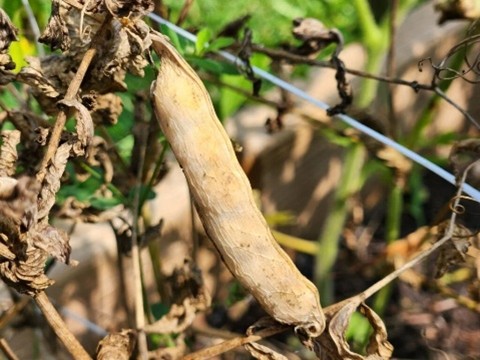
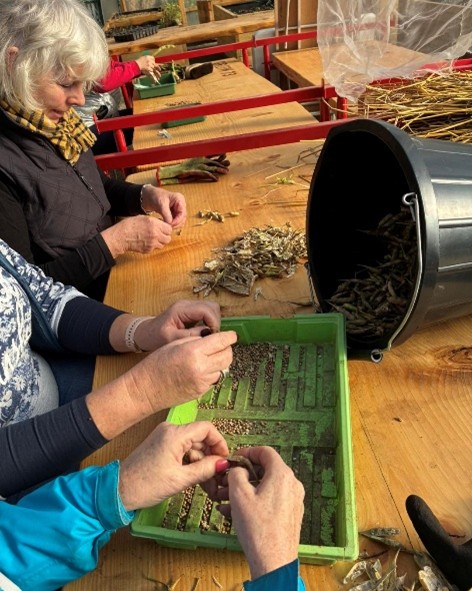
As recently as 50 – 60 years ago it was common practice amongst gardeners to save and swap seeds, but sadly this has seen a massive decline. Modern living has brought many conveniences, but often at a cost. Since the introduction of industrial farming, the need for uniformity in crops and the adoption of hybrid plants have not only reduced demand for this vital skill but also contributed to the loss of fruit and vegetable varieties that thrive in our climate. The good news is we can work together to bring some of this back. Saving seeds is easy when you know how. For many of us, if you’re already growing, you’re already halfway there. The thing to remember is to choose open-pollinated (OP) or heirloom varieties, not F1 hybrids. *F1 hybrids will not give you reliable seeds. Not all crops need isolation cages or fancy equipment; some are incredibly easy to save seed from. Focusing on these crops to start will provide you with viable seed for next year, and you really don’t need to do much. For self-pollinating crops like peas and beans, simply leave pods on the plant until brown and papery – you’ll hear seeds rattle inside when ready.
So why is any of this important? These days, we can go to our local supermarket and buy seeds for 30p a packet. Why not just use these? Cheap seeds aren’t necessarily bad; most are fine, but saving your own seed builds community resilience and reduces your reliance on international suppliers. Over generations, your saved seeds adapt to local conditions, developing resistance to pests, diseases and climate challenges. It’s about independence, not just saving 30p.
*F1 Hybrids are seeds grown in specialist conditions for certain characteristics- for example, a long, straight cucumber. However, if you save seeds from F1 plants, they don’t necessarily grow true to type, so they don’t work well for seed saving. Who needs straight cucumbers anyhow?
Our seed-saving guide includes instructions for 7 easy-to-save seed crops, along with additional guidance on fermentation and storage.
A few easy wins
Peas
Beans
Tomatoes
Dill
Peppers
Chillies
Nasturtium
Calendula
By no means exhaustive, but easy crops to ensure success and grow your confidence.
Post written by Dave Mathews, Grow 73. You read more about Grow 73 here.